Digging Before You Build: Why Legacy System Archaeology Is the Prerequisite Every Modernization Project Ignores
There is a particular kind of organizational optimism that takes hold whenever a modernization initiative is announced. The old system — slow, undocumented, maintained by a shrinking pool of specialists — finally has an expiration date. The new platform promises speed, scalability, and a clean slate. Leadership signs off. Timelines are drafted. And then, somewhere between the kickoff meeting and the first major milestone, reality intervenes.
For a significant number of US enterprises, that reality arrives in the form of a cascading series of failures: business processes that stop working, edge cases that the new system cannot handle, integrations that silently break, and end users who quietly revert to manual workarounds. The project limps forward, costs balloon, and the organization is left with a half-finished migration and a growing suspicion that the old system was, somehow, doing more than anyone realized.
It was. It almost always is.
The Illusion of Simplicity in Aging Systems
Legacy systems acquire a reputation for being bloated, inefficient, and technically primitive. That reputation is not entirely undeserved. But the same systems that frustrate IT teams with their outdated interfaces and brittle architectures are frequently doing something that no one has bothered to document: solving real operational problems that accumulated over years of production use.
Every patch applied after a business rule changed, every workaround coded in response to a regulatory requirement, every exception handler added because of a one-time data anomaly that turned out to recur quarterly — these are not clutter. They are a record of the organization's operational history. They encode decisions made by people who have long since retired, in response to conditions that may no longer be visible to anyone currently on staff.
When a modernization team approaches a legacy system as a problem to be replaced rather than a system to be understood, they are effectively discarding that history without reading it.
What Legacy System Archaeology Actually Involves
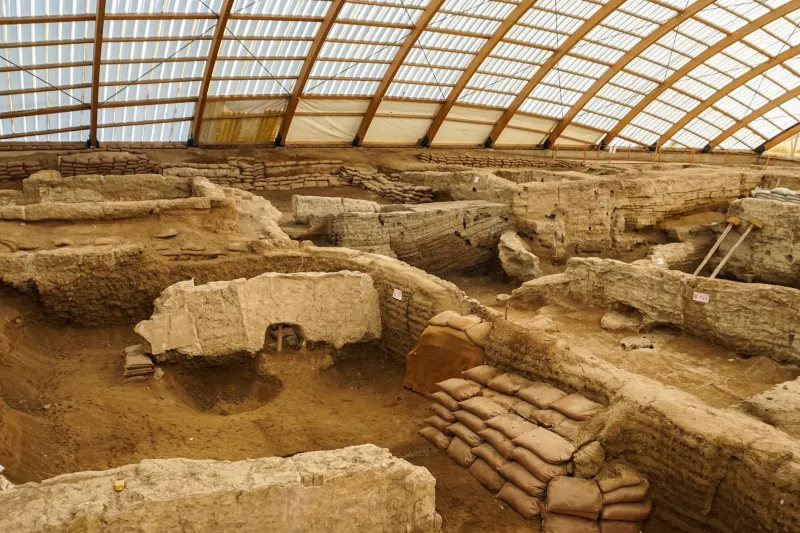
The term "legacy system archaeology" is not hyperbole. Approaching an aging codebase with the intent to truly understand it requires the same patience, methodical discipline, and interpretive judgment that an archaeologist brings to a dig site. The goal is not simply to catalog what the system does on the surface, but to understand why it does it — and what organizational or operational reality each layer of code was responding to.
In practical terms, this means several distinct workstreams running in parallel before any replacement effort begins.
Dependency mapping involves tracing every integration point — internal and external — that the legacy system touches. In large enterprises, this frequently surfaces connections that no current team member was aware of. A payroll system may be feeding a compliance reporting tool through a flat-file export that runs at 2 a.m. every Friday. A customer-facing portal may be pulling reference data from a table that the legacy system populates as a side effect of a completely unrelated transaction. These dependencies do not appear in any architecture diagram because they were never formally designed — they evolved.
Workflow reconstruction requires interviewing the people who actually use the system, not just the IT staff who maintain it. Business users, particularly those who have been with an organization for a decade or more, often possess critical knowledge about why the system behaves in specific ways during specific circumstances. This institutional knowledge exists nowhere in writing. When those employees leave — and during multi-year modernization projects, some inevitably do — that knowledge leaves with them.
Code-level forensic analysis involves examining the codebase itself for embedded business logic that has never been externalized. Complex pricing rules, eligibility calculations, exception-handling sequences — these are frequently buried inside application code rather than stored as configurable parameters. A replacement system that does not account for this logic will produce incorrect outputs, often without any obvious error signal.
The Cost of Skipping This Step
The US technology landscape is littered with high-profile modernization failures that trace back, in whole or in part, to an insufficient understanding of the system being replaced. While specific organizations rarely publicize these failures in detail, the pattern is consistent enough that it has become a recognized risk category in enterprise IT project management.
The financial exposure is substantial. Industry research consistently finds that a significant proportion of large-scale modernization projects exceed their original budgets, often by margins that would have funded the legacy system's continued operation for years. But the financial cost is only part of the picture. The operational disruption caused by a failed replacement — lost transactions, degraded customer experiences, compliance gaps — can generate consequences that persist long after the technical issues are resolved.
Perhaps most damaging is the organizational toll. A failed modernization project consumes not just budget but credibility. IT leadership loses the trust of the business. Future transformation initiatives face heightened skepticism. The organization may overcorrect by becoming excessively conservative, allowing genuinely outdated systems to persist far longer than they should.
A More Disciplined Approach to System Replacement
The alternative to archaeological investigation is not indefinite delay. Legacy systems do need to be replaced. The risks associated with aging infrastructure — security vulnerabilities, vendor support discontinuation, talent scarcity — are real and grow over time. The argument here is not for preservation but for preparation.
Organizations that invest in understanding their legacy systems before replacing them consistently produce better modernization outcomes. They enter replacement projects with a documented inventory of business rules, a clear map of integration dependencies, and a realistic assessment of the complexity they are taking on. They are better positioned to make informed decisions about which components to replicate in the new system, which to retire, and which to redesign.
This preparation phase also produces a secondary benefit that is frequently underestimated: it creates an opportunity to rationalize. Many of the rules and workflows embedded in legacy systems reflect business conditions that no longer apply. A thorough archaeological review often surfaces processes that can be simplified or eliminated entirely — reducing the scope of the replacement project and improving the quality of the target architecture.
The Technology Partner's Role
For most enterprises, this kind of deep system analysis requires external expertise. Internal teams are often too close to the system, too operationally constrained, or too focused on day-to-day maintenance to conduct a rigorous archaeological review. An experienced technology partner brings both the analytical methodology and the organizational distance needed to see the system clearly.
Effective modernization consulting begins not with a recommendation but with a question: What does this system actually do, and why? The answer to that question, pursued with genuine rigor, is the foundation on which every subsequent architectural decision should rest.
Modernization is not a shortcut. It is a commitment — one that deserves the same intellectual seriousness as the operational complexity it is meant to resolve. Organizations that treat the discovery phase as a formality will continue to learn that lesson at significant cost. Those that invest in understanding before they build will find that the path forward is considerably less treacherous than it first appeared.