The Connectivity Mirage: How Enterprise Integration Platforms Are Producing Data Movement Without Decision-Making Clarity

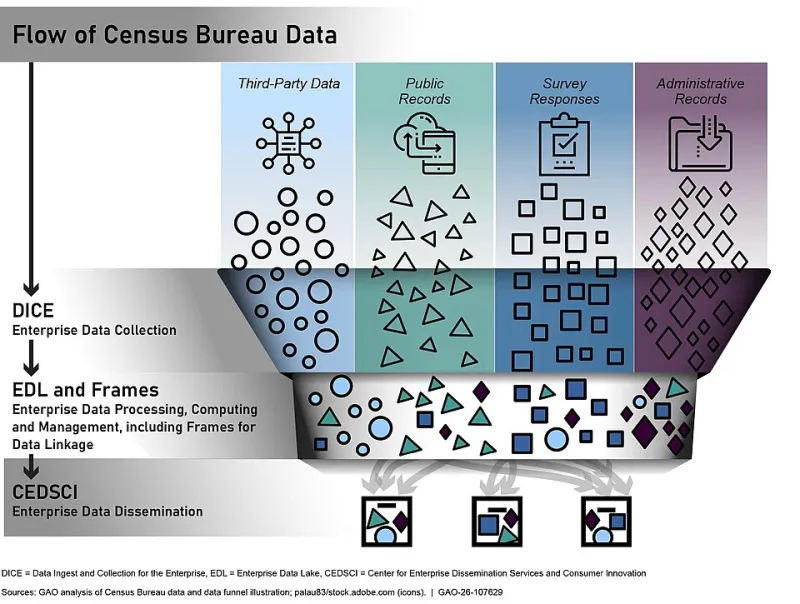
Visit the architecture diagram of almost any large US enterprise today and you will find something that looks, at first glance, like a triumph of modern engineering. Data flows from CRM platforms to analytics warehouses, from ERP systems to reporting dashboards, from operational databases to machine learning pipelines. APIs connect systems that were never designed to speak to each other. Event streams carry transactional signals across organizational boundaries in near real time. The diagram is dense, sophisticated, and — on its face — impressive.
Then you speak with the people who are supposed to be making decisions based on all of this information. And a different picture emerges.
The Gap Between Flow and Understanding
Across industries and organization sizes, a recurring complaint surfaces among enterprise leaders: despite significant investment in data infrastructure and integration platforms, the experience of decision-making has not materially improved. Reports take too long to reconcile. Figures from different systems do not agree. Teams in adjacent business units are working from different versions of what should be the same underlying data. Strategic questions that seem like they should be answerable — What is our true customer acquisition cost across all channels? Which product lines are genuinely profitable when fully loaded costs are applied? — remain frustratingly difficult to answer with confidence.
This is the integration paradox. The data is moving. The systems are connected. But the decisions that depend on that data are no clearer than they were before the integration platform was deployed.
Understanding why requires distinguishing between two things that enterprise architecture conversations frequently conflate: connectivity and alignment.
Connectivity Is Not Alignment
Connectivity is a technical property. It describes whether data can travel from one system to another. Alignment is an organizational property. It describes whether the people using that data share a common understanding of what it means, how it was generated, what it excludes, and how it should inform decisions.
Enterprise integration platforms are extraordinarily effective at producing connectivity. They are not, by design, capable of producing alignment. Alignment requires organizational work — the hard, unglamorous work of establishing shared data definitions, resolving conflicts between business units about how metrics should be calculated, and building governance structures that ensure data quality is maintained at the point of origin rather than corrected downstream.
When organizations invest heavily in integration infrastructure without doing that organizational work, they do not achieve data-driven decision-making. They achieve data-saturated decision-making — a condition in which the volume of available information actually impedes clarity rather than supporting it. Analysts spend their time reconciling discrepancies between systems rather than generating insight. Executives learn to distrust dashboards that have burned them before. Decisions default back to intuition, not because the data is unavailable, but because no one is confident in what it represents.
How Integration Projects Obscure the Real Problem
One reason this dynamic persists is that integration projects are evaluated on technical deliverables rather than decision-making outcomes. A project is declared successful when the data pipeline is operational, the latency targets are met, and the integration layer is passing validation tests. Whether the business units consuming that data are actually making better decisions — and whether they have the shared conceptual framework necessary to do so — is rarely part of the success criteria.
This creates a perverse incentive structure. The integration team delivers a technically excellent product. The business continues to struggle with fragmented decision-making. Both things are true simultaneously, and neither party has clear accountability for the gap between them.
Vendors of enterprise integration platforms have limited incentive to surface this distinction. Their value proposition is connectivity, and connectivity is what they deliver. The organizational alignment work that would make connectivity valuable is professional services revenue at best — and a scope-of-work complication at worst.
Diagnostic Questions Worth Asking
For enterprise leaders attempting to assess whether their integration investments are generating genuine decision-making value or merely producing sophisticated data movement, several diagnostic questions are worth examining honestly.
First: when two reports from different systems disagree, what is the resolution process? If the answer involves significant manual reconciliation, escalation chains, or simply choosing to trust one source over another based on institutional habit, the integration layer is not producing alignment — it is producing competing versions of reality at higher speed.
Second: can any senior leader in the organization articulate, without consulting an analyst, where the enterprise's most important operational metrics come from and what they exclude? If the answer is no — if the metrics are trusted outputs of a black box rather than understood measures of understood phenomena — the organization is not data-driven. It is data-dependent, which is a meaningfully different condition.
Third: are the teams that generate data and the teams that consume it in regular, structured dialogue about data quality and definition? If those conversations are not happening, or if they only happen when a crisis forces them, the integration platform is moving data between organizational silos that remain fundamentally disconnected at the level that matters most.
From Movement to Meaning
Correcting this requires reframing what enterprise integration is actually for. The technical goal — enabling data to move between systems — is necessary but insufficient. The strategic goal is enabling the organization to reason coherently from shared information. That distinction should drive every decision about integration architecture, from the design of canonical data models to the governance structures that maintain them.
In practical terms, this means investing in data stewardship as seriously as in data engineering. It means establishing cross-functional ownership of critical business metrics, with explicit accountability for their definition and quality. It means building integration roadmaps that are organized around decision-making use cases rather than system connection points — asking not 'how do we connect system A to system B?' but 'what decision does this connection need to support, and what does that decision require in terms of data quality, timeliness, and shared interpretation?'
None of this diminishes the value of sophisticated integration infrastructure. The ability to move data reliably and at scale is a genuine technical capability that enterprises need. But it is a means to an end, not the end itself. Organizations that treat integration as the destination will find themselves with beautifully connected systems and persistently fragmented understanding. Those that treat it as the infrastructure for organizational alignment will be positioned to extract the decision-making value that the investment was always supposed to deliver.